
Start with the check, because it needs nothing but your phone camera and a short wait. After it, the rest of this page covers what the result means, what to look for outdoors, and how a technician actually finds a pipe you cannot see.
The meter test, one step at a time
This is the only do-it-yourself check on the site, and it answers a narrow question: is water moving through your meter when nothing in the house should be using it?
Stop all water use
Make sure nobody is running a tap, a shower, a dishwasher or a washing machine, and that nothing is filling on its own.Photograph the meter dial
Take a clear picture of the reading so you have a record to compare against.Wait 30 minutes
Leave everything alone. Do not flush, rinse or top up anything during the wait.Photograph the dial again
Put the two pictures side by side. A reading that has moved, with no use in the house, points to water escaping somewhere past the meter.
A moved dial does not say where the water is going. It could be the buried line, or it could be something inside the walls. That is the next question, and it is the technician’s job to answer it. If the dial has not moved at all, a leak on your side of the meter is less likely, though a very slow one can hide, so keep an eye on the bill.
What the yard may be telling you
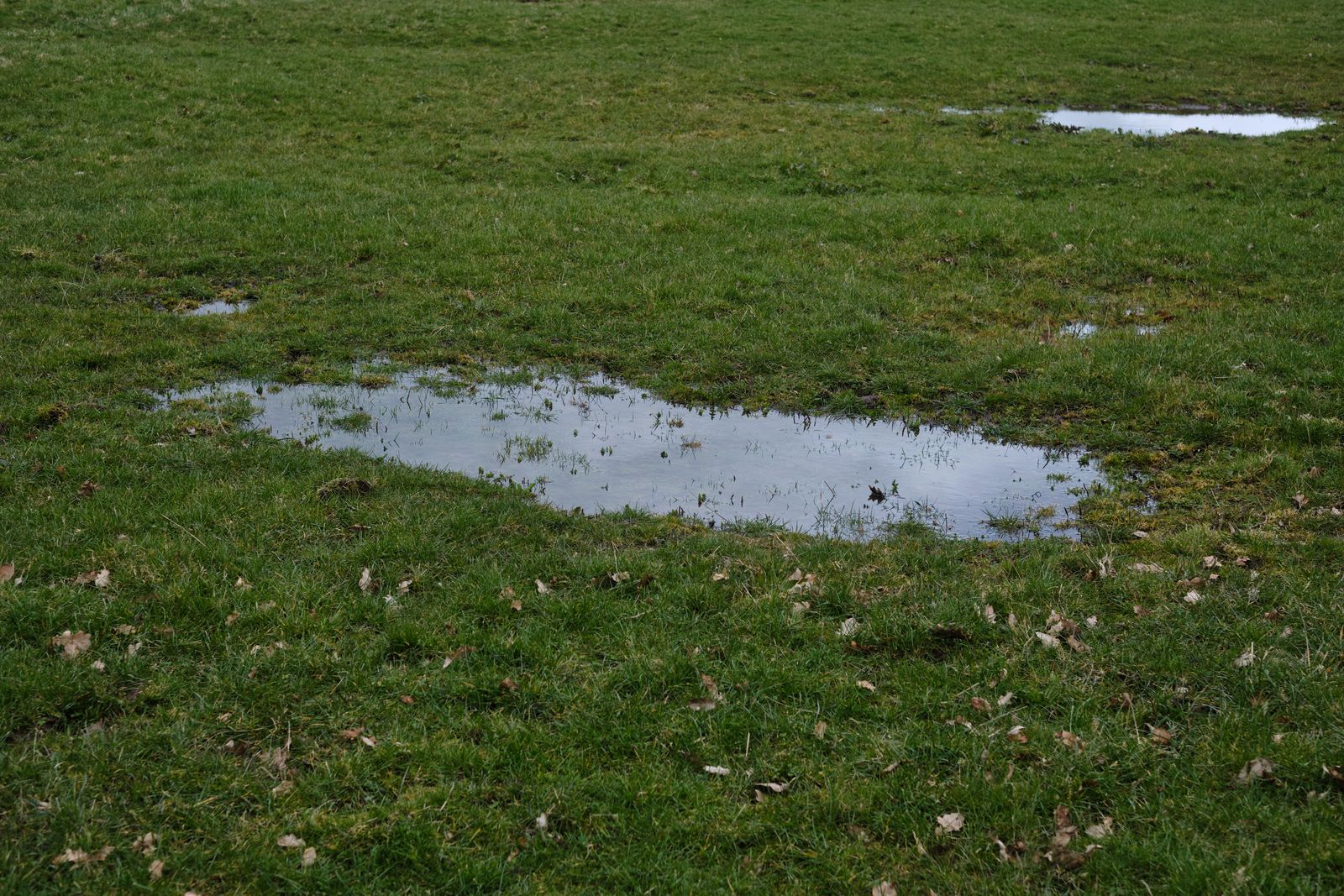
Buried leaks are sneaky, but the ground sometimes gives them away. Water escaping from a pressurised pipe has to go somewhere, and it often rises toward the surface or travels along the trench the pipe sits in.
- A strip of lawn that stays soggy or turns lusher and greener than the grass around it, even in dry weather
- A soft or sunken patch between the meter and the house
- Water pooling in the curb box or meter pit
- A hissing or humming noise where the line enters the house
- Pavers, a walkway or a driveway edge that has begun to settle
- A water bill that jumps with no change in how you live
None of these proves a leak by itself. Rain, sprinklers and drainage all leave damp ground. But several signs together, along with a moving meter, make a strong case for a locating visit. If the ground is soft, keep people and cars off it until someone has looked.
How a technician pinpoints a hidden leak
Digging blind is the expensive way to find a leak. Locating work exists so the crew opens the ground in one precise place instead of hunting along the whole route. Different methods suit different pipes and soils, and a technician often combines them.
- Acoustic listening
- Sensitive microphones on the meter, valves or the ground surface pick up the sound that escaping water makes. The loudest point suggests where the pipe is failing.
- Route tracing
- Equipment follows the buried pipe so the crew knows where it runs. This matters when the line has bends, was rerouted years ago, or has no records.
- Pressure testing
- Sections of the system are isolated and checked to see whether pressure holds. A drop narrows the search to the part of the line that is losing it.
- Reading the surroundings
- Wet ground, the age of the pipe and any signs of settlement all give context that supports what the instruments show.
None of these methods is perfect on its own, since soil type, pipe material and background noise all affect what instruments can hear. That is why technicians confirm with a second method when the first is unclear, and why an honest answer may include some uncertainty about the exact spot.
Outside leak or inside leak?
Part of locating a leak is deciding where it is. A moving meter has two broad suspects, and the repair for each is very different.
| Leak on the buried line | Leak inside the house | |
|---|---|---|
| Where the water goes | Into the soil, often unseen | Into walls, floors or ceilings |
| Typical outdoor clues | Soft ground, greener grass, pooling at the box | Usually none |
| Typical indoor clues | Pressure may sag across the house | Stains, odours, damp materials |
| Who it concerns here | This is the main line work the technician handles | A technician will say so and point you onward |
This site covers the buried line. If the investigation shows the water is escaping inside the house, the technician will tell you honestly, and that part falls outside this service.
When a leak has been found
Finding the spot is not the end. The technician explains what is wrong, whether a localised repair makes sense, and whether the pipe is in a condition where replacement deserves a conversation. You hear the options and the upfront pricing before any work begins.
Sometimes the leak is a single failed joint and the rest of the line looks sound. Sometimes the break is one of several signs that an old run is tired. A galvanized or older line that keeps springing leaks is the situation we cover in our guide to aging service lines, and a leak that is stealing pressure from the whole house is closely related to the issues on our low water pressure page.
Whichever route you take, the aim is to open as little ground as the job requires, repair or replace what the evidence points to, and test the result before the hole is closed.
Where we see hidden leaks in Mechanicsburg
Older homes with older pipe
In the pre-war borough and the 1960s–2000s subdivisions around it, first-generation lines are reaching the age where joints loosen and metal thins. A basement can hide a leak at the point where the line comes through the wall, and mature trees add root pressure along the route.
Newer communities
You might assume a new home cannot leak, but connections and settling backfill can still cause trouble. In Walden, with its newer materials and compact layouts, a slow leak at a fitting may be the culprit rather than a worn-out pipe. Short runs and tight town-home lots mean the crew often has little room to work, so a precise location matters.
Rural and village lots
Fewer neighbours means fewer eyes on the yard. In Bowmansdale and similar village and rural lots, a leak can seep into open ground for a long time before anyone notices the greener patch or the bill. Longer runs also mean more pipe to inspect.
Cold winters add another layer. Frost and freeze-thaw cycles stress buried lines, and a joint that held through summer may open up as the ground moves. Depth and exposure depend on the property, which is why the technician looks at your specific lot.
Questions we hear about buried leaks
The meter test is the starting point. With everything off, photograph the dial, wait 30 minutes and photograph it again. A change suggests water is escaping past the meter, but it does not say whether the leak is buried or inside. Soft ground, a hissing sound or pooling at the meter pit point outdoors. A technician confirms the location with proper locating equipment.
Yes. Water may drain away through loose or sandy soil, follow the pipe trench, or slowly soak a large area without surfacing. A hidden leak often shows up first as a higher bill or a meter that moves when nothing is running. That is why the meter test is useful, and why a locating visit can find a problem the lawn never revealed.
Locating work is mostly non-invasive. Technicians use listening equipment and route tracing from the surface, and may check pressure at accessible points. Digging usually begins only once the spot is identified, and then it is a targeted opening rather than a long trench. Ask the technician what to expect on your lot, and mention any driveway, patio or landscaping that sits over the line.
Then the technician will tell you so plainly. This service covers the buried line between the meter or curb stop and the house, so an interior leak falls outside it. You will not be pushed into buried-line work you do not need. The locating visit still has value, because ruling out the main line tells you where the water is not going.
Modern methods can narrow a leak to a small area, but no method is perfect. Soil type, pipe material, traffic noise and depth all affect what instruments pick up. Technicians often confirm with a second method before opening the ground. Treat any location as a well-informed estimate that the dig then verifies, not a promise of an exact spot. Ask the technician how confident they are and what they will do if the first opening does not reveal the problem.
If water is visibly escaping, yes. Find the main shut-off inside the house, often on a basement wall in older homes or on a garage or exterior wall in slab homes, and close it. If nothing is visibly escaping, you can wait with the supply on, but keep people and vehicles off any soft ground. Take care not to dig, because other utilities may run nearby.
It can. A slow leak runs around the clock, so the total adds up over weeks even though no single moment looks dramatic. Billing periods smooth it into a quiet climb that is easy to blame on the weather or guests. Comparing your bill to the same season last year can reveal a pattern, and a meter test tells you whether something is running right now.
A moving meter with no visible clue is exactly when locating equipment earns its keep. The water may be going into the soil unseen, or leaking inside a wall. Repeat the meter test once to confirm, close the main shut-off if water is escaping, and call. The technician can tell whether the problem is buried or indoors without guessing, which saves you from paying for work in the wrong place.
The technician explains what the evidence shows, from a single failed joint to a line in poor condition overall. You hear the options, such as a spot repair or a replacement conversation, along with the upfront pricing before any work begins. Nothing starts until you understand the plan. Ask the independent service provider about any warranty that applies to your job. Ask any question you like before saying yes.