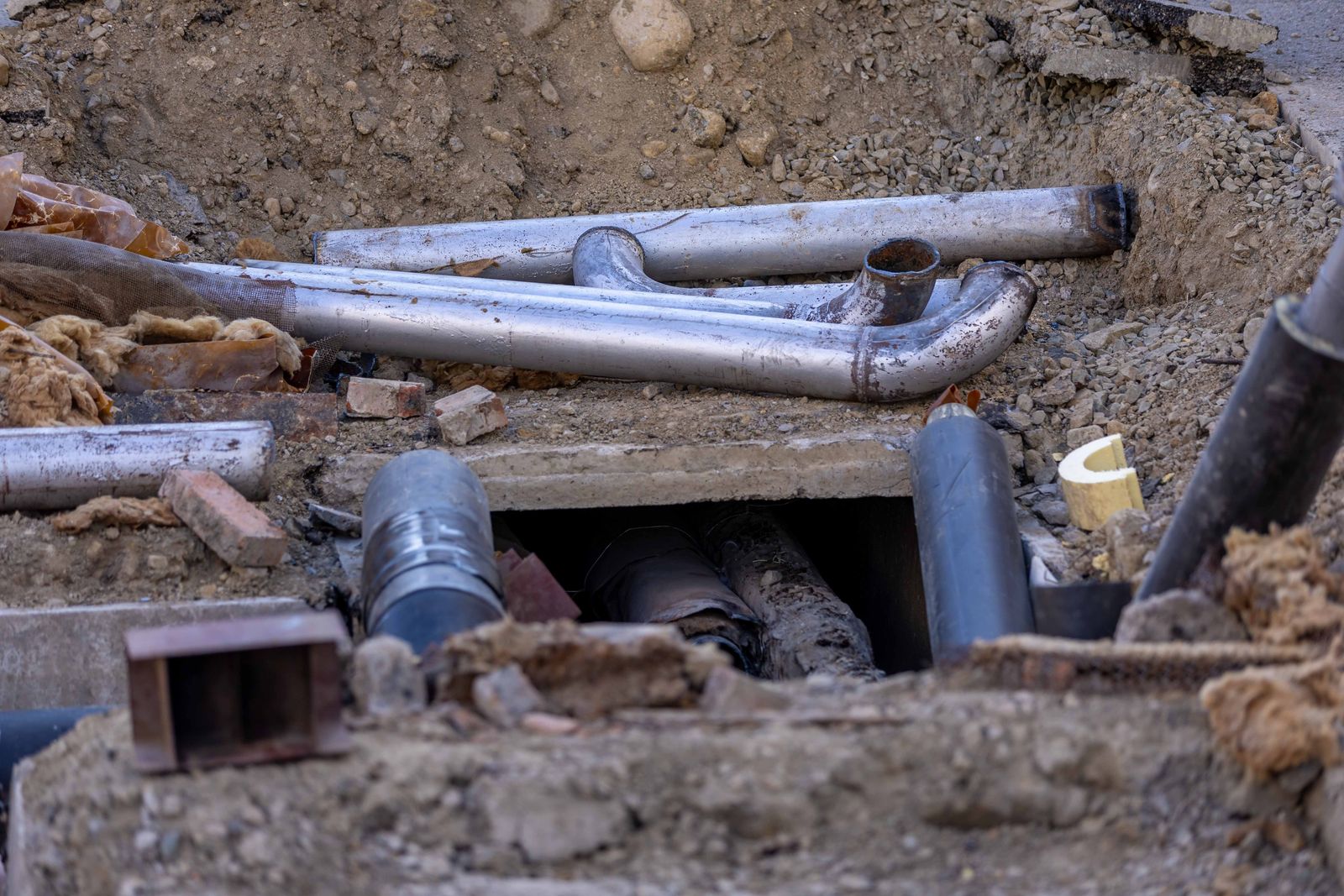
Most people searching for main water line replacement in Mechanicsburg are not shopping for a project. They are reacting to something: a repair that did not hold, a meter that will not sit still, a house full of rust-coloured water in the morning. This page walks through the decision and then through the work itself, so the conversation on the phone is easier.
Your main line is the buried pipe that carries water from the meter, curb stop or property line to the house. It sits out of sight under turf, walks and driveway, which is why a failing one is so hard to judge by looking. The technician we dispatch starts by working out what that pipe has been through.
Replace it or fix it: how the call gets made
A single clean leak on an otherwise sound pipe is a candidate for a spot repair on the main line. Replacement enters the picture when the pipe itself is the problem rather than one bad joint. The table below shows the usual dividing lines, not a verdict. Only a look at the actual line settles it.
| What you are seeing | Leans toward | Why |
|---|---|---|
| One leak, pipe otherwise looks sound | Repair | The failure is local and the rest of the run may have plenty of service left in it. |
| Second or third leak on the same run | Replacement | Repeated failures tend to mean the whole pipe is wearing out, not one spot. |
| Pressure down across the whole house | Replacement | Corroded or narrowed pipe restricts flow along its entire length. |
| Rust-coloured water that returns daily | Replacement | Older steel lines shed scale from the inside as they age. |
| Line crosses a driveway or a root zone | Depends | Route and access can matter as much as the pipe condition. |
Ownership affects the decision too. The private side of the line, from the meter or curb stop to your home, usually belongs to the homeowner, but the dividing point varies, so check with your water provider before anyone digs. If the failure is on the provider’s side of that point, the work is theirs to arrange.
Following the pipe across a Mechanicsburg lot
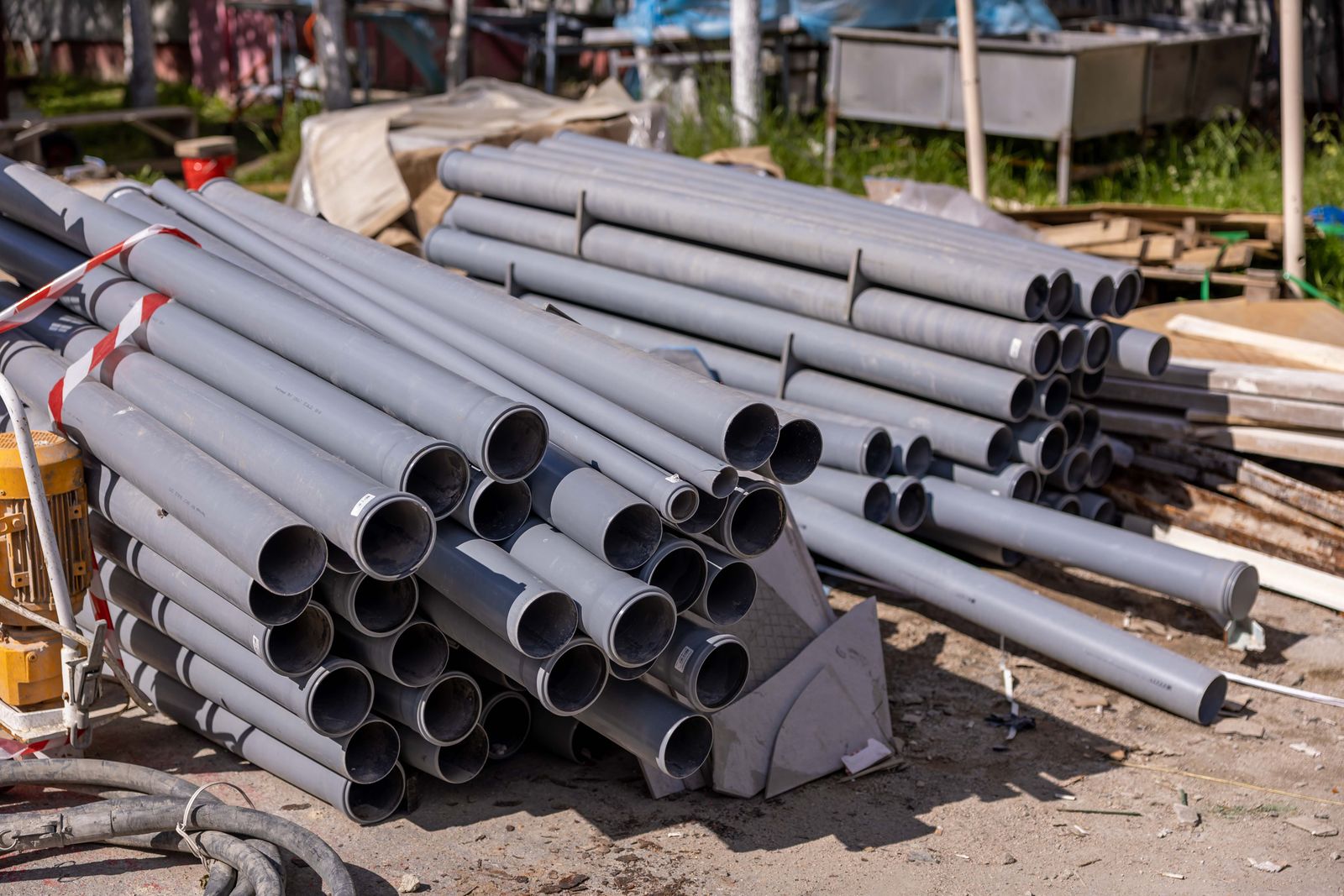
The run is usually a fairly straight line from the curb to the point where the pipe enters the foundation. In older homes that point is often a basement wall; on slab homes it tends to be a garage or utility closet. Along the way the pipe may pass under a sidewalk, a planting bed, a driveway apron and the roots of whatever tree the previous owners planted.
The technician will ask where your shut-off is, which side of the house the meter sits on and whether the driveway or walk has been replaced since the house was built. Those answers shape the route before anyone has picked up a shovel. A lot with a shared drive and tight side yard is a different job from a wide suburban lot with a clear lawn run.
Open trench or trenchless: the choice behind the route
An open trench exposes the whole pipe, which makes it simple to see what else is down there and to connect cleanly at both ends. It costs you a strip of lawn. Trenchless methods work from small access pits and thread the new pipe through the ground, which can spare driveways and mature landscaping. Trenchless work is not available on every lot, and it is not automatically the less expensive option.
The things that decide it are mostly practical: soil conditions, how straight the old route is, how much hardscape sits on top and how many other utilities cross the path. The technician will lay out which method fits your property and why, along with the trade-offs, before any work begins.
What the new pipe is made of
Pipe choice is something to ask about directly, since options and local practice vary. Described in general terms, a few families of material are in common use for buried residential water lines today. The technician will tell you what they propose and why it suits your property.
- Copper
- A long-established choice, rigid, and familiar to many plumbers. Handled with care at connections.
- Cross-linked polyethylene
- Flexible tubing that bends around obstacles and suits long runs and bore work.
- Fittings and valves
- Just as important as the pipe. Ask what connects the new line to the meter and to your house.
The day of the work, in order
No two jobs run the same, and the technician will describe the sequence for your site. In broad terms, though, a replacement tends to follow this shape.
Shut-off and locating
The water is turned off and buried utilities are marked before the ground is opened, so the crew knows what shares the corridor.Excavation or boring
Either a trench follows the old route, or small pits are opened at each end for a trenchless pull.New pipe and connections
The replacement line is set and joined at the meter side and at the house, with the old pipe retired or removed.Pressure test
Before anything is buried or finished, the new line is tested for leaks under pressure.Backfill and tidy-up
The ground is filled and compacted in stages, and the work area is left ready for turf or paving repair.
What happens to the lawn, the drive and the beds
Expect some disturbance. A trench leaves a visible strip of turned earth that settles over the following weeks and often needs topsoil and seed. Trenchless work leaves smaller patches at the pits. Paving is the real question: if the line runs under a driveway, the choices are boring beneath it or cutting it, and cutting means patching afterwards.
Shrubs and small plants over the route can often be lifted and replanted. Large trees are different, since cutting through their roots is something to discuss rather than assume. Raise it early. Landscaping decisions are easier on the phone than once the excavator is idling in your yard.
Why lines of a certain age give out in Mechanicsburg homes
Housing age is the quickest clue. In the borough core around Main Street, W Strawberry Ave and Simpson St, pre-war houses may still carry galvanized steel or other early supply pipe, and the corridors there are crowded with sidewalks and curbs. Our page on Mechanicsburg Borough goes into what that does to a replacement route.
Out along the Carlisle Pike, Trindle Road and Wertzville Road, the 1960s through 2000s subdivisions have first-generation lines now reaching the end of their working lives in the older tracts. At the other extreme, the newer community of Walden has recent materials, so trouble there is more likely a connection or settling backfill than a worn-out pipe.
Climate adds its own load. Cold winters mean frost reaching deep into the ground and repeated freeze and thaw, which can stress buried lines and their joints. Ground in parts of the Cumberland Valley sits on limestone, which is one possible reason soil shifts around a pipe over the decades.
Straight answers on replacing the line
Look at the pattern, not one symptom. A single leak on a pipe that is otherwise sound often suits a repair. Repeated leaks, pressure that is poor all over the house, discoloured water that keeps coming back and an old galvanized pipe at the wall point toward replacement. The technician we dispatch will check the pipe, its age and its route, then explain which way it leans. You can read about spot repairs to compare.
There is no honest single number. Longevity depends on the material, the water, the soil, how deep frost reaches and how well the connections were made. Older steel lines tend to give trouble sooner than newer copper or plastic, and a pipe laid in tough ground may age faster than a neighbour’s. Instead of guessing from the calendar, ask the technician what condition your pipe is in today and what signs of wear they can see.
Water has to be off while the old pipe is disconnected and the new one is joined, so expect an interruption. How long it lasts depends on the route, the method and what is found underground. Ask the technician for the water-off window for your job before it starts. Plan your day around that window, and the crew will tell you when the water is back on.
Usually the homeowner owns the pipe on the house side of the dividing point, which differs from one provider to the next. Please check with your water provider before assuming. If the problem sits on their side, they handle it. The technician can help you work out where the private section ends, which saves money and arguments later on.
It depends on your municipality and what the job involves, and we would not want to state a rule that may not match your address. Requirements, if any, are set locally. The technician we dispatch will tell you what applies to your property and how approvals are handled. If you are curious beforehand, your township or borough office can tell you what they ask for on buried line work.
Sometimes. Trenchless methods can often pass beneath paving from pits on either side, which is a big reason people choose them. They do not work on every lot, because soil, depth and the existing route all matter. If the driveway has to be cut, the technician will explain that and the patching plan up front. Read more about trenchless options and what limits them.
It varies by job and local practice. Copper and flexible plastics such as cross-linked polyethylene or polyethylene are common choices for buried residential water lines today. The technician will tell you which they propose and why it suits your route, soil and connections. Ask about the fittings and shut-off valve as well, because the joints are where a new line is most likely to have trouble.
Often, if the old pipe was corroded or narrowed, because a clear new line carries more water. That is not certain, since pressure also depends on the provider’s supply, your pressure regulator and plumbing inside the house. The technician will check those as part of the diagnosis and tell you honestly whether the line is likely the cause. See our page on low pressure from the main line for the full picture.
Ask which method is proposed and why, what the new pipe and valve are made of, how other buried utilities will be located, what the lawn and paving plan is, what the water-off window looks like and what the price includes. Ask how any warranty applies. A technician who welcomes these questions, and answers them plainly before work starts, is a good sign.