
Hampden Township sits in ZIP 17050, and a good share of its homes went up between the 1960s and the 2000s, in large subdivisions that spread out from the Carlisle Pike and Trindle Road corridors. Those streets were built to be lived in for a long time, and they have been. The original water service lines, the ones buried between the street and each foundation, are now old enough that leaks and pressure loss are showing up house after house.
Big lots, big trees, finished lower levels
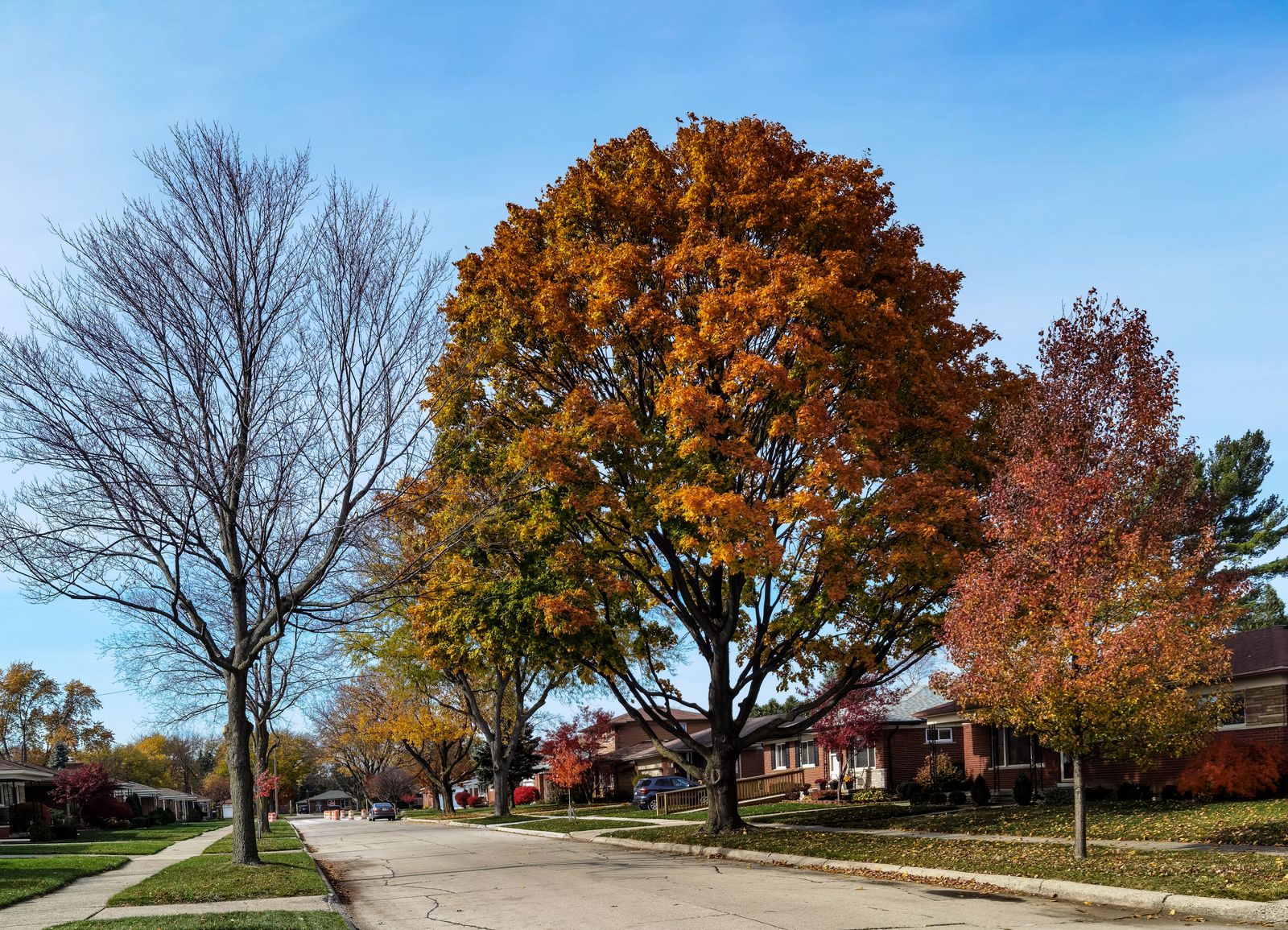
Drive through any of these tracts and the pattern repeats. A wide front lawn, a driveway to one side, a tree planted by the original owners that is now taller than the roofline. The service line usually crosses that lawn on a fairly straight run to the foundation wall, and somewhere along it, roots, driveway edges and decades of settling have all had their say.
The older houses tend to have basements, and plenty of those basements are finished now: carpet, drywall, a family room, a laundry area. That changes the stakes. A slow leak at the wall where the line enters can hide behind paneling for a long time, and a fast one can ruin a room.
What sets Hampden apart
- Original lines from the first build-out of each subdivision are the most likely to be nearing the end of their useful life, while the newest tracts are not.
- Long, open front yards mean longer runs than a borough lot, with more ground to cover and more chances for a failure to hide.
- Driveways, patios and mature plantings often sit directly on the route, which shapes the choice between digging and going trenchless.
- Finished basements raise the cost of a slow leak that nobody notices.
How lines in these subdivisions usually fail
Most failures here come down to a few ordinary causes. Corrosion works on older metal lines from the inside. Joints and fittings loosen where the pipe changes direction or meets the house. Roots find the weep and crowd it. Freeze-thaw cycles through the winter add stress to a line that is already tired, and in parts of the Cumberland Valley, settling ground can be one more possible factor.
The result is rarely dramatic at first. You see a bill that does not match your habits, or pressure that sags when the dishwasher runs, or the sound of water where nothing should be running. The spot repair page walks through what a spot repair involves and when it makes sense.
In a township like this one, finding the exact spot matters more than almost anything. The line may run a long way under lawn and driveway, and the damp patch on the surface is not always directly over the break. That is where underground leak detection earns its place: it locates the failure so the work can be narrow instead of wide.
Replacement in a tract like this is rarely a one-size job. A lot with a clear lawn and no hardscape may suit a simple open trench. A lot where the route runs under a mature tree, a paver walk or a driveway pad may call for a gentler approach, and the trenchless option has honest limits that the technician will lay out. Neither is automatically the easier or lower-cost route.
Why a working shut-off matters in a finished basement
When a line lets go inside a finished space, the minutes count. Everyone in the house should know where the main shut-off is and that it turns. Valves that sit untouched for years can seize, and a seized valve turns a manageable leak into an emergency. If yours is stiff or weeps, bring it up when you call.
What the technician checks first on a Hampden home
The visit starts with questions about the house, then with the shut-off and the meter. From there the technician looks for the simplest explanation before the expensive one.
Shut-off and meter
Does the valve close fully, and does the meter move with everything off?Entry point
Where the line comes through the foundation, and what the wall and floor nearby look like.Surface clues
Soft or unusually green ground, sunken patches and any damp edge along the driveway.Route and obstacles
Trees, driveway crossings, patios and landscaping between the street and the house.
If the evidence points to a failed section, the next question is repair or replacement. A short break on an otherwise sound line can often be fixed in place. A line that has failed more than once, or that is corroded along its length, is a stronger candidate for a full replacement day.
What a call looks like
You phone, and a person answers, at any hour, because calls are answered 24/7. You describe the house, the symptoms and when the subdivision was built if you know. We connect you with a local technician, with same-day or emergency dispatch where available. Before any digging starts, you hear the options and the upfront pricing, with no hidden fees. Ask the independent service provider about any warranty that applies to your job. If you took meter photos or know roughly when the home was built, say so, since both help the technician arrive with the right expectations.
Next door
Hampden shares borders and housing patterns with Silver Spring Township along the Carlisle Pike corridor, where older farm-edge homes sit beside fast-built newer tracts. Toward the heart of town, Mechanicsburg Borough has the pre-war core with an even older kind of pipe.
What Hampden homeowners ask
It tends to be a factor. Lines from that era have had a long time to corrode, loosen at the joints and collect root intrusion, so leaks and pressure loss are more common than in newer tracts. That is a general tendency, not a verdict on your home. A technician can look at your actual line and tell you where it stands.
Warning signs include a musty smell, paint or paneling that bubbles, damp carpet near the foundation, or a meter that moves with every tap off. None of these alone proves a main line leak. If you suspect one, close the main shut-off if water is escaping and call, so the source can be traced before more damage happens.
Roots usually do not crack a healthy pipe. They are drawn to joints that already seep and can enlarge those gaps over time. With mature trees on many Hampden lots, it is worth telling the technician where your trees are relative to the route so that any digging plan can respect them. That helps avoid surprises later.
It is a planning question, not a dead end. Depending on the line and the ground, the work may pass beneath the driveway without lifting it, or a section may need to be opened. The technician explains which looks likelier on your property before work begins. Trenchless methods have limits, so the answer varies from lot to lot.
A small leak on the buried line can lose water around the clock without any visible sign, and your meter records every drop. If the dial turns with all water use stopped, water is going somewhere past the meter. The 30 minute photo test is the one check you can do before calling. Photograph the dial both times.
On most lots the stretch from the meter or curb box to the foundation is usually the homeowner’s, although providers draw that boundary in different places. If the leak turns out to be on the provider side, you would need to contact them. Check with your water provider, and the technician can help judge which side the problem sits on.
In most cases the goal is exactly that. Locating methods listen for or trace the leak so the excavation can be limited to the failed spot. Results depend on the line material, the depth and the ground, so it is not an exact science every time, but it usually beats digging blind. It is a way of keeping the dig small.
It can be, especially on an older line narrowed by corrosion. It can also be a valve or something inside the house. The technician checks the likely culprits in order and rules out the simpler causes first, so you only pay to replace the line if the line is what is wrong. That is why the order of checks matters.
Yes. A valve that will not turn fully leaves you without a quick way to stop water in an emergency, which counts most when the basement is finished. Mention it on the call. Replacing the shut-off is often a smaller job than people expect, and it can be coordinated with the line work. It is worth raising early.